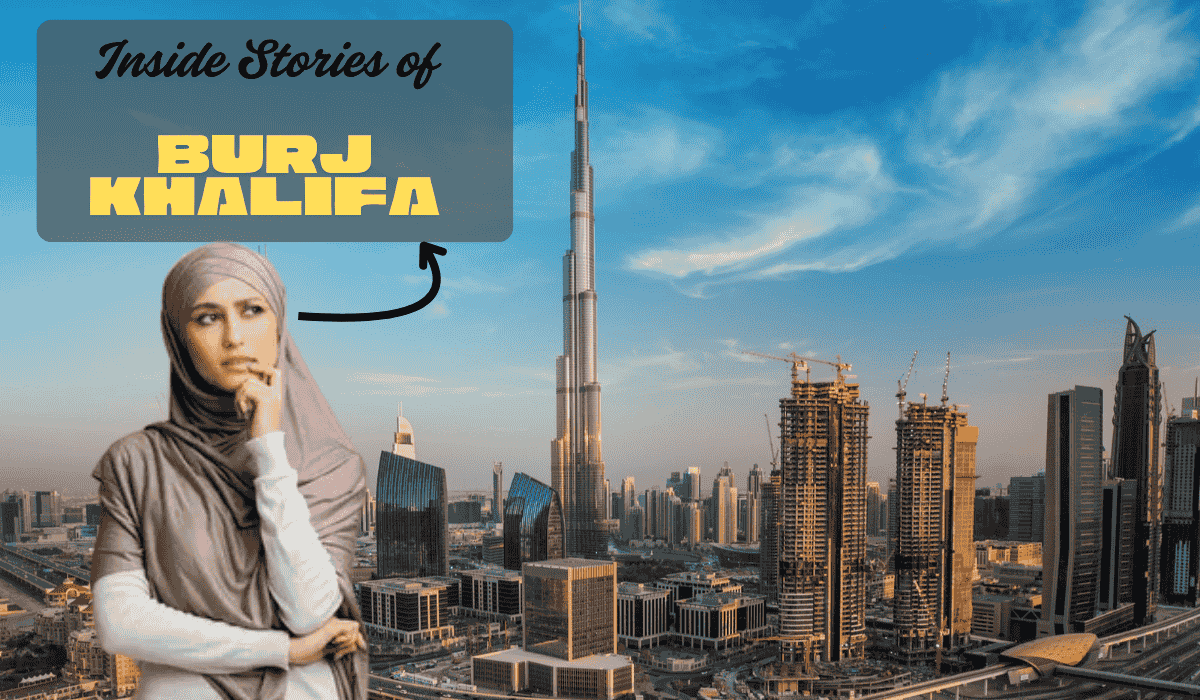
Dubai’s skyline is a living exhibition of ambition, creativity, and structural mastery. At the very heart of that panorama stands the extraordinary Burj Khalifa, a tower whose scale and presence have become synonymous with the phrase “architectural marvel.” UAE Trip Guide, a leading travel and culture platform, takes you behind the scenes of Dubai’s most iconic landmarks and the visionary minds who brought them to life. In this article, UAE Trip Guide proudly presents Architectural Marvels of Dubai: Inside Stories of the Burj Khalifa and Beyond, your comprehensive look at how Dubai became a global epicenter of architectural innovation. In this feature, we’ll examine not only the Burj Khalifa itself, but also the broader story of how Dubai’s built environment has evolved its urban masterpieces, landmark architecture, and engineering brilliance. You’ll gain insight into design vision, construction challenges, material innovation, and what these structures mean for the city’s identity.
1. The Rise of a Visionary City
When most cities grow, they expand outward. Dubai, however, chose to grow upward — boldly and unapologetically. Once a modest trading hub along the Arabian Gulf, the city redefined its skyline in just a few decades, turning its desert landscape into a futuristic metropolis recognized across the globe. The concept of “architectural marvels” here isn’t just a slogan; it’s a reflection of Dubai’s determination to merge culture, art, and technology into a physical form. What makes Dubai truly remarkable is its ability to transform ambition into reality. Every structure is more than a building — it’s a story told in steel, concrete, and glass. The city’s leadership and visionaries have turned urban development into an art form, pushing architects, engineers, and designers to create landmarks that redefine what’s possible.
2. The Burj Khalifa: Defining the Impossible
Vision and Design
The Burj Khalifa is more than just the world’s tallest building — it’s a statement of human potential. Conceived by the renowned architectural firm Skidmore, Owings & Merrill, and designed by architect Adrian Smith, the structure reflects both modern innovation and cultural symbolism. Its Y-shaped floor plan draws inspiration from the Hymenocallis flower, a desert bloom native to the region, symbolizing growth, resilience, and beauty emerging from harsh conditions. The design fuses Islamic architectural traditions with futuristic materials and geometry, creating a harmony between heritage and modernity. Each tier of the tower tapers elegantly toward the sky, a spiral of steel and glass that captures Dubai’s aspiration to reach higher, both literally and figuratively.
Structural Engineering Feats
The Burj Khalifa’s construction pushed engineering to its limits. Standing over 828 meters tall, the structure uses a “buttressed core” design — a central hexagonal core reinforced by three wings, ensuring stability against high winds and seismic pressures. Engineers developed a specialized high-performance concrete mix capable of withstanding the immense pressure of the building’s weight while enduring Dubai’s scorching climate. Even the logistics of construction were monumental. Concrete was pumped vertically over 600 meters, a world record at the time. Every façade panel was designed to reflect sunlight efficiently, minimizing heat gain while preserving aesthetic brilliance. It’s not just tall — it’s technically masterful.
The Human Experience
Inside the Burj Khalifa, the experience transitions from engineering marvel to human wonder. It houses luxury residences, offices, restaurants, and observation decks offering panoramic views of Dubai and the Arabian Gulf. The “At the Top” experience allows visitors to step into the clouds, standing at the highest publicly accessible viewpoint in the world. Each level of the tower tells a story of precision and purpose from the marble-clad interiors to the double-decker elevators that glide effortlessly through the heart of the building. The Burj Khalifa embodies what Dubai stands for: vision translated into structure.
3. Beyond the Burj: Other Icons of Innovation
Dubai’s architectural wonders extend far beyond the Burj Khalifa. The city has cultivated a skyline that celebrates diversity in form, function, and design philosophy.
- Burj Al Arab – The Sail of the Gulf: Shaped like a billowing sail on its own artificial island, designed by Tom Wright. Interior of gold leaf and mosaic; foundation on deep concrete piles resisting waves.
- Cayan Tower – The Twisting Sculpture: 90-degree helical twist in Dubai Marina; each floor rotated 1.2 degrees for wind resistance and views.
- Dubai Frame – A Portal in the Sky: 150-meter golden frame in Zabeel Park; bridges Old and New Dubai with interactive exhibits.
- Museum of the Future – The Poetic Void: Elliptical form with Arabic calligraphy façade; hollow center symbolizing tomorrow’s possibilities.
| Landmark | Height | Architect | Key Innovation |
|---|---|---|---|
| Burj Khalifa | 828 m | Adrian Smith (SOM) | Buttressed core, record concrete pump |
| Burj Al Arab | 321 m | Tom Wright | Offshore island foundation |
| Cayan Tower | 307 m | Skidmore, Owings & Merrill | 90° structural twist |
| Dubai Frame | 150 m | Fernando Donis | Panoramic old/new view |
| Museum of the Future | 78 m | Killa Design | Parametric calligraphy façade |
READ ALSO: Decoding Dubai’s Souks: Shopping for Authentic Crafts and Spices
4. Themes That Unite Dubai’s Architectural Story
Across these structures, certain themes emerge — themes that tell us what truly defines Dubai’s architecture.
Vision and Innovation
Dubai’s architecture is driven by vision, not imitation. Each project begins with a concept that challenges limits — to be taller, more efficient, or more meaningful. Innovation isn’t a byproduct; it’s the foundation.
Sustainability and Smart Design
As Dubai evolves, so too does its focus on sustainable construction. The city is investing in smart systems for energy management, water conservation, and renewable materials. The integration of AI-driven building management and environmentally responsive façades represents the next phase of its architectural journey.
Cultural Identity in Modern Form
Dubai’s architectural DNA remains rooted in its heritage. The geometric motifs, calligraphic details, and courtyards that echo Islamic design ensure that even the most modern towers carry a thread of tradition. This blend of old and new gives Dubai’s skyline its unique soul.
5. The Human Side of Architectural Marvels
The story of Dubai’s skyline isn’t only about blueprints and steel beams; it’s about the people who imagined and built it. Architects, engineers, craftsmen, and construction workers from around the world came together to turn an impossible vision into a physical reality. Take the Burj Khalifa, for example: over 12,000 workers from 100 nationalities contributed to its construction. Each worker, designer, and supervisor became part of a narrative larger than themselves — one that reshaped a city’s identity and inspired millions. These human stories, often untold, give emotional depth to Dubai’s architectural journey. Every bolt tightened and every panel installed carries within it the passion, skill, and perseverance that define human achievement.
6. Architecture as a Cultural Bridge
Dubai’s buildings are more than tourist attractions; they’re bridges connecting cultures, ideas, and time periods. The Burj Al Arab represents luxury rooted in Arabian hospitality. The Museum of the Future stands as a promise of innovation for the next generation. The Burj Khalifa symbolizes limitless ambition, and the Dubai Frame physically connects the city’s heritage to its modern face. Together, they form a collective narrative — a dialogue between art, science, and humanity. It’s this synthesis that makes Dubai’s architecture not only visually stunning but emotionally resonant.
7. The Future of Dubai’s Architectural Evolution
Looking ahead, Dubai continues to set global benchmarks. Future projects are pushing boundaries in sustainability, artificial intelligence, and smart city planning. Concepts like vertical gardens, carbon-neutral skyscrapers, and adaptive façades are no longer futuristic dreams — they are being built today. The upcoming “Dubai Creek Tower,” designed by Santiago Calatrava, is expected to surpass the Burj Khalifa in height and redefine structural elegance. Meanwhile, developments like Expo City Dubai demonstrate how architectural planning can harmonize technology with environmental responsibility. The evolution of Dubai’s skyline mirrors the evolution of its values — from ambition to innovation to sustainability. Every new structure adds a chapter to this ongoing story.
8. Visiting Dubai’s Architectural Wonders
For travelers, exploring Dubai’s architectural marvels is an experience that blends sightseeing with inspiration. Start your journey at the Burj Khalifa, ascend to its observation decks, and witness the city unfold below. Move on to the Burj Al Arab, where luxury meets design. Then visit the Dubai Frame and Museum of the Future to understand the city’s cultural and futuristic balance. Guided experiences, such as those provided by UAE Trip Guide, allow visitors to discover hidden insights — the creative decisions, engineering challenges, and human stories that make these structures iconic. Whether you’re an architect, a photographer, or simply a curious traveler, Dubai offers a lesson in how imagination shapes the real world.
9. Why Dubai’s Architecture Matters to the World
Dubai’s architecture has transformed global perceptions of what cities can achieve. It’s not just about height or luxury — it’s about redefining possibility. The city demonstrates how visionary leadership, technological innovation, and cultural respect can coexist harmoniously in design. Around the world, architects look to Dubai as a case study in urban reinvention. From the Burj Khalifa’s engineering principles to the Museum of the Future’s parametric modeling, Dubai’s innovations ripple across continents. The city has become both a classroom and a canvas for the next generation of global designers.
10. Final Thoughts
From the soaring heights of the Burj Khalifa to the twisting elegance of the Cayan Tower, from the poetic curves of the Museum of the Future to the iconic sail of the Burj Al Arab, Dubai’s skyline is a testament to human ambition. These structures aren’t just buildings, they’re stories carved into the sky. Through this feature by UAE Trip Guide, ‘Architectural Marvels of Dubai: Inside Stories of the Burj Khalifa and Beyond,’ we reveal the essence of a city that continues to dream big and build even bigger. Every skyscraper, every façade, and every shimmering panel tells a story of persistence, artistry, and vision. Dubai’s architecture stands as a living proof that when imagination meets innovation, the result is more than a skyline it’s a symbol of what humanity can achieve when it refuses to accept limits.