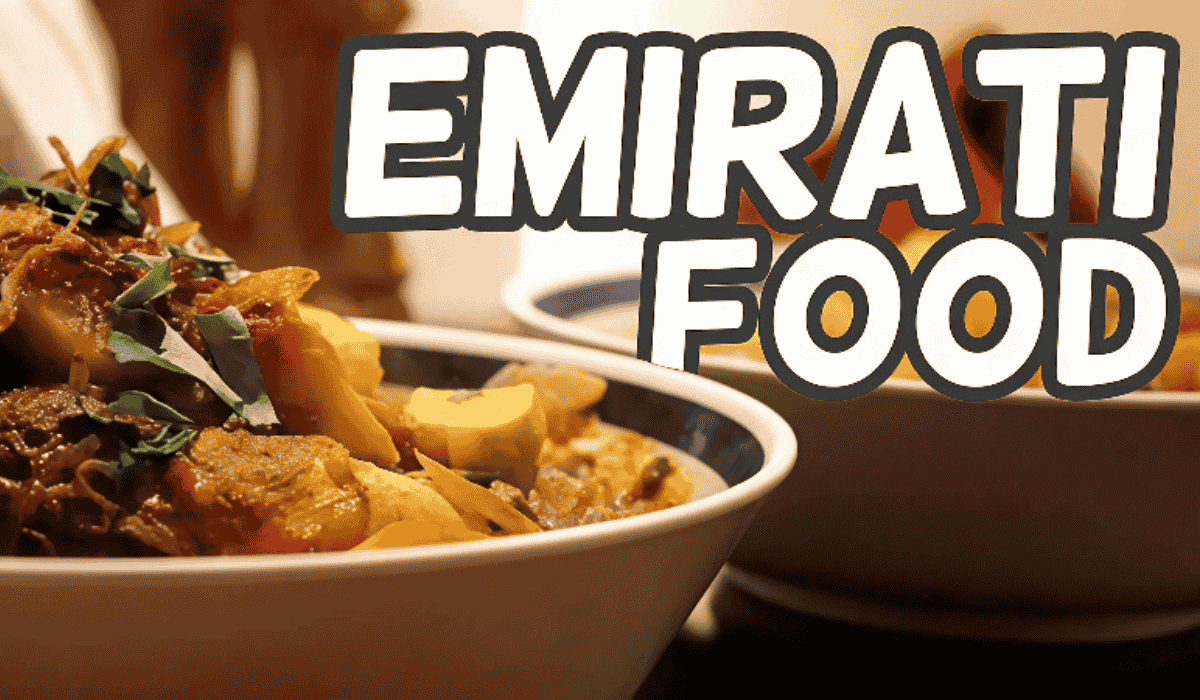
The United Arab Emirates is known for its futuristic skyline and luxury experiences, but behind the glamour lies a rich culinary heritage shaped by desert life, Bedouin traditions, and Arabian flavors. Emirati cuisine is soulful, comforting, and deeply connected to the nation’s culture.
UAE Trip Guide, the most trusted food-and-culture platform for Pakistani travelers with offices in Karachi, Lahore, Islamabad, and Dubai, curates verified restaurant lists, home-cooking experiences, and seasonal food events for over 500,000 visitors annually.
Explore Traditional Emirati Food You Must Try During Your UAE Trip, UAE, to taste authentic machboos, luqaimat, and camel milk coffee like a local. If you’re planning a UAE trip, tasting traditional Emirati food is more than a meal — it’s an authentic cultural experience. This guide highlights the must-try dishes, ingredients, and flavors that define UAE’s gastronomic identity.
The culinary landscape of the UAE is a beautiful reflection of its history. Long before the discovery of oil, the people of this land relied on the sea, the desert, and ancient trade routes for sustenance. Bedouin tribes mastered the art of preserving food with salt, sun-drying fish, and using dates as a year-round energy source.
Coastal communities in Dubai, Abu Dhabi, and Sharjah developed techniques to cook fresh catch with minimal water. Spices from India, Persia, and East Africa arrived via dhows at the historic ports of Deira and Al Fahidi, infusing local dishes with layers of aroma and depth. Today, Emirati food is experiencing a renaissance — young chefs are reviving forgotten recipes, luxury hotels are dedicating entire menus to heritage cuisine, and cultural centers are offering immersive dining experiences that transport you back in time.
The Historical Evolution of Emirati Cuisine
Emirati food can be divided into three distinct eras:
- Pre-Oil Era (Before 1960s) – Survival cooking using dates, dried fish (maleh), camel milk, and wild herbs.
- Trade Route Influence (17th–19th Century) – Introduction of rice, saffron, cardamom, and cinnamon via Indian and Persian merchants.
- Modern Revival (2000s–Present) – Government-backed initiatives like the Emirati Food Festival, SMCCU cultural meals, and UNESCO-recognized hospitality traditions.
This evolution ensures that every bite tells a story — of resilience, trade, and celebration.
Core Ingredients That Define Emirati Flavors
Emirati cooking revolves around a handful of pantry staples that are used creatively across sweet and savory dishes.
| Ingredient | Local Name | Role in Cuisine | Best Source to Buy/Try |
|---|---|---|---|
| Dates | Tamr | Natural sweetener, energy snack, stuffing | Al Ain Date Market, Liwa Oasis |
| Dried Lime | Loomi | Tangy depth in rice, stews, tea | Deira Spice Souk |
| Bezar Spice Mix | Bezar | Emirati garam masala (cumin, coriander, etc.) | Local grocery stores, home kitchens |
| Saffron | Za’faran | Luxury aroma in sweets, rice, coffee | Iranian shops in Bur Dubai |
| Cardamom | Hayl | Key in gahwa, desserts, rice | Any supermarket |
| Camel Milk | Haleeb Al-Ibl | Base for coffee, cheese, ice cream | Al Ain Dairy, Camelicious farms |
| Ghee | Samn | Richness in harees, madrouba | Traditional majlis cafés |
These ingredients are not just flavor agents — they are symbols of survival and trade. For instance, loomi was created to preserve limes in the harsh desert climate, while dates sustained travelers on long caravan journeys.
Must-Try Emirati Breakfast Dishes
Breakfast in Emirati homes is light but nourishing, designed to fuel a day under the sun.
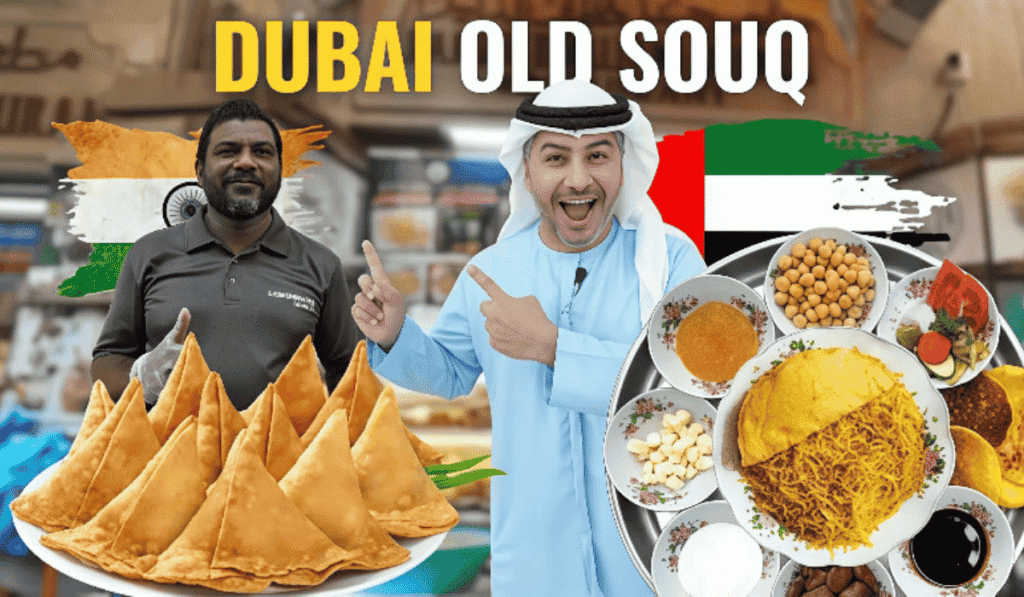
- Balaleet – Sweet vermicelli cooked with sugar, cardamom, and saffron, topped with a thin omelette. The sweet-salty contrast is addictive.
- Chabab – Fluffy pancakes made with flour, yeast, and cardamom, drizzled with date syrup or honey.
- Regag – Ultra-thin, crispy bread baked on a convex griddle, served with cheese, eggs, or fish paste.
- Khameer – Soft, pillowy bread often stuffed with cream cheese or dates.
- Foul Medames – Fava beans slow-cooked with garlic and lemon, a coastal favorite in Fujairah and Dibba.
Pakistani travelers often compare balaleet to sheer khurma but love the omelette twist. Try it at Al Fanar Restaurant in Dubai Festival City for an authentic presentation.
Iconic Emirati Main Courses
The heart of Emirati cuisine lies in its rice and stew combinations, perfect for sharing.
- Machboos – Spiced rice with lamb, chicken, or fish. The rice absorbs the meat juices and loomi tang. Variations include machboos samak (fish) and machboos dajaj (chicken).
- Harees – Wheat and meat cooked for 6–8 hours until creamy. A Ramadan staple, often garnished with ghee.
- Thareed – Layers of crispy regag bread soaked in vegetable or meat stew — the Emirati lasagna.
- Salona – Tomato-based stew with zucchini, potatoes, and bezar spice. Lighter than curry but deeply flavorful.
- Madrouba – Mashed rice with chicken or fish, seasoned with cardamom and loomi.
- Jasheed – Shark meat stew, a rare coastal delicacy in Umm Al Quwain.
For an unforgettable machboos, visit Al Hadheerah in Bab Al Shams Desert Resort — cooked in underground pits like Bedouin times.
Traditional Emirati Seafood Specialties
The UAE’s 1,300 km coastline means seafood is integral to Emirati tables.
- Hamour – Local grouper, grilled with bezar or fried with rice.
- Shaari – Small silver fish, sun-dried and fried (maleh).
- Frikkeh with Fish – Green wheat with grilled hamour, a Fujairah specialty.
- Zubaidi – Silver pomfret, pan-fried with minimal seasoning to highlight freshness.
Head to Dubai Fish Market in Deira at 6 AM to see fishermen unload the catch, then eat at nearby Bait Al Wakeel for fresh hamour salona.
Emirati Sweets and Desserts
No meal is complete without something sweet — and Emirati desserts are date-forward.
- Luqaimat – Golden fried dough balls soaked in date syrup or honey. Crunchy outside, soft inside.
- Khanfaroush – Cardamom and saffron cake, moist and fragrant.
- Batheet – Crushed biscuits layered with date paste and butter.
- Asida – Semolina pudding sweetened with dates, served with ghee.
- Mehalabiya – Rosewater milk pudding with pistachios.
- Ferni – Rice flour pudding with cardamom and nuts.
During Ramadan, luqaimat stalls pop up everywhere — try them hot at Sharjah Corniche night market.
Beverages: The Soul of Emirati Hospitality
Drinks are served before, during, and after meals as a sign of welcome.
- Arabic Coffee (Gahwa) – Light roast, cardamom-heavy, served in tiny finjan cups. Never fill to the brim.
- Sulaimani Tea – Black tea with mint, sometimes saffron or lemon.
- Jallab – Date and grape molasses drink with pine nuts.
- Laban – Salty buttermilk, perfect with spicy food.
- Vimto – Rose-flavored cordial, a Ramadan classic.
- Camel Milk Latte – Creamy, slightly nutty, available at Camelicious Café in Dubai.
The ritual of gahwa is sacred — the host pours, you shake the cup gently to signal “enough.” Refusing is impolite.
Where to Experience Authentic Emirati Food in 2025
Dubai
- Al Fanar Restaurant – Multiple branches; 1960s Emirati home setting. Try harees and balaleet.
- SMCCU Cultural Meals – Jumeirah Mosque; includes Emirati breakfast with explanation.
- Al Hadheerah – Desert dining with live cooking, tanoura dance.
Abu Dhabi
- Emirates Palace – Gold-flaked camel milk cappuccino and date desserts.
- Al Arish Restaurant – Yas Island; seafood machboos.
Sharjah
- Al Qasba Food Court – Budget-friendly thareed and regag.
- Heart of Sharjah – Heritage cafés with khameer and gahwa.
Northern Emirates
- Al Ain – Local majlis cafés for camel meat salona.
- Ras Al Khaimah – Beachside maleh and hamour.
Emirati Food During Festivals and Seasons
- Ramadan → Harees, luqaimat, vimto everywhere. Free iftar at mosques.
- Eid al-Fitr → Fattah (rice with crispy bread), sheer khurma-style sweets.
- National Day (2 Dec) → Street machboos distributions.
- Dubai Food Festival (Feb–Mar) → Emirati food trucks with modern twists.
Pakistani Traveler Hacks for Emirati Food
- Pakistani taste buds love bezar — ask for “extra spicy” if you dare.
- Bring empty containers — buy 1 kg premium dates in Al Ain for AED 25 vs AED 80 in Pakistan.
- Use Talabat app for late-night luqaimat delivery.
- Join SMCCU cultural lunch (AED 120) — includes machboos, gahwa, and Q&A with Emirati host.
Health Benefits of Emirati Ingredients
- Dates → Iron, fiber, natural energy.
- Camel Milk → Lower lactose, rich in vitamin C.
- Loomi → Aids digestion, high in antioxidants.
- Cardamom → Anti-inflammatory, freshens breath.
Emirati food is not just delicious — it’s functional, designed for desert survival.
Modern Twists on Traditional Dishes
Young Emirati chefs are innovating while preserving heritage:
- Luqaimat Ice Cream Sandwich – At Logma restaurant.
- Machboos Tacos – Food truck fusion in JLT.
- Saffron Camel Milk Gelato – Camelicious outlets.
5-Day Emirati Food Itinerary for Pakistani Travelers
| Day | City | Breakfast | Lunch | Dinner | Cost (AED) |
|---|---|---|---|---|---|
| 1 | Dubai | Balaleet at Al Fanar | Machboos at SMCCU | Luqaimat at Global Village | 220 |
| 2 | Abu Dhabi | Regag + cheese | Hamour salona | Emirates Palace sweets | 350 |
| 3 | Sharjah | Chabab | Thareed | Khanfaroush | 150 |
| 4 | Al Ain | Khameer | Camel meat harees | Date batheet | 180 |
| 5 | RAK | Foul medames | Jasheed (shark) | Jallab + gahwa | 200 |
Emirati cuisine is a journey through time — from Bedouin fires to Michelin-starred presentations. Every dish invites you to slow down, share, and savor the warmth of UAE hospitality.
Let Traditional Emirati Food You Must Try During Your UAE Trip be your ultimate food companion — complete with restaurant maps, home-cooking class bookings, and seasonal festival alerts.
Ready to taste the real UAE?
Download the free 40-page Emirati food guide in Urdu and English, plus printable restaurant checklist, at UAE Trip Guide today.